
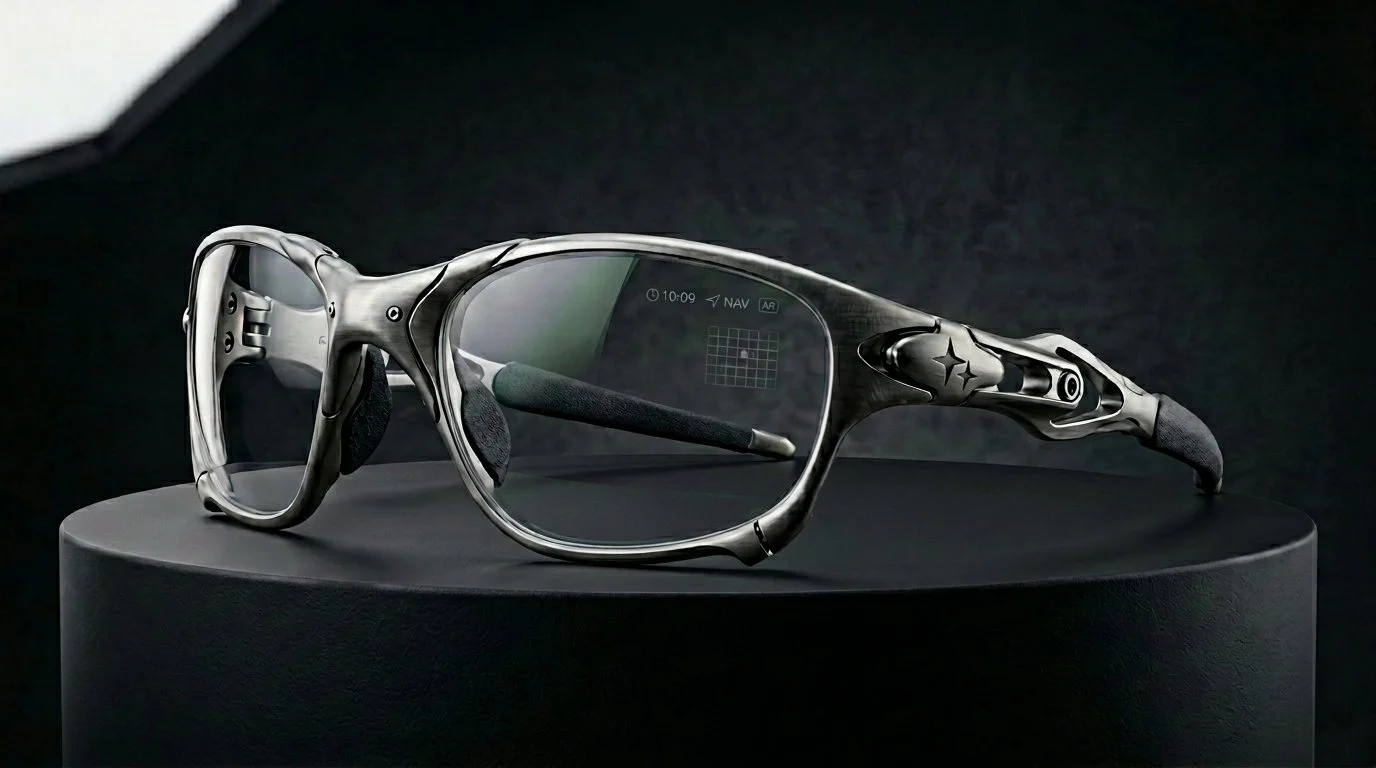

Concept: An AI-Native Operating System for Smart Glasses
Overview
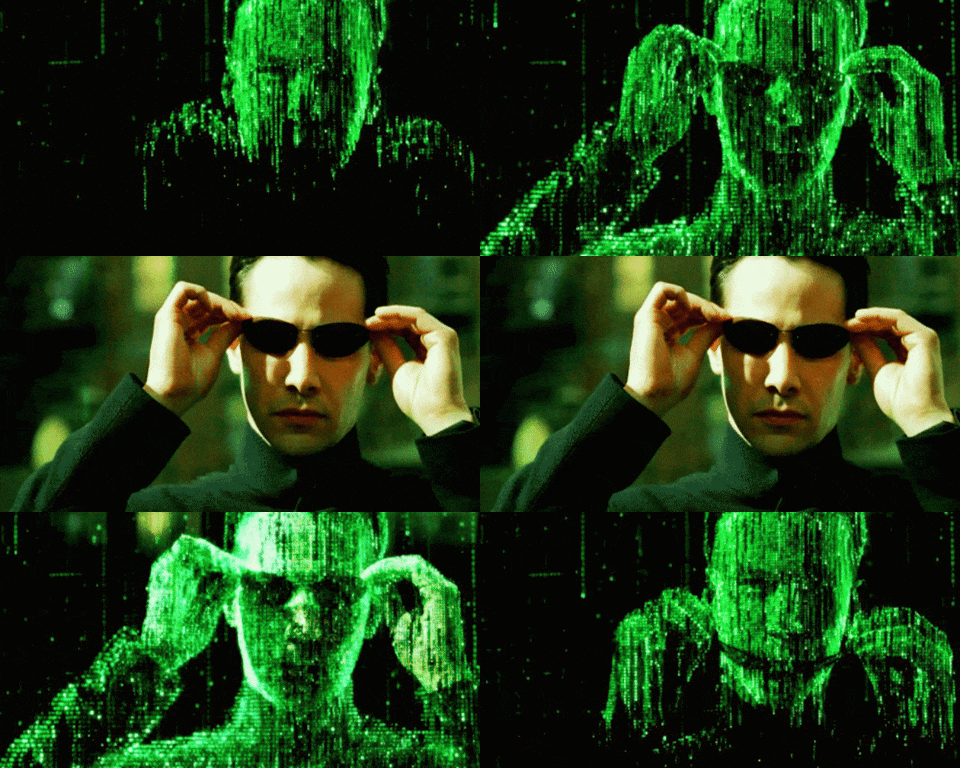
For decades, computing has required us to repeatedly shift attention between the digital and physical worlds.

We look at a conversation, then down at a phone.

We focus on a workout, then glance at a smartwatch.
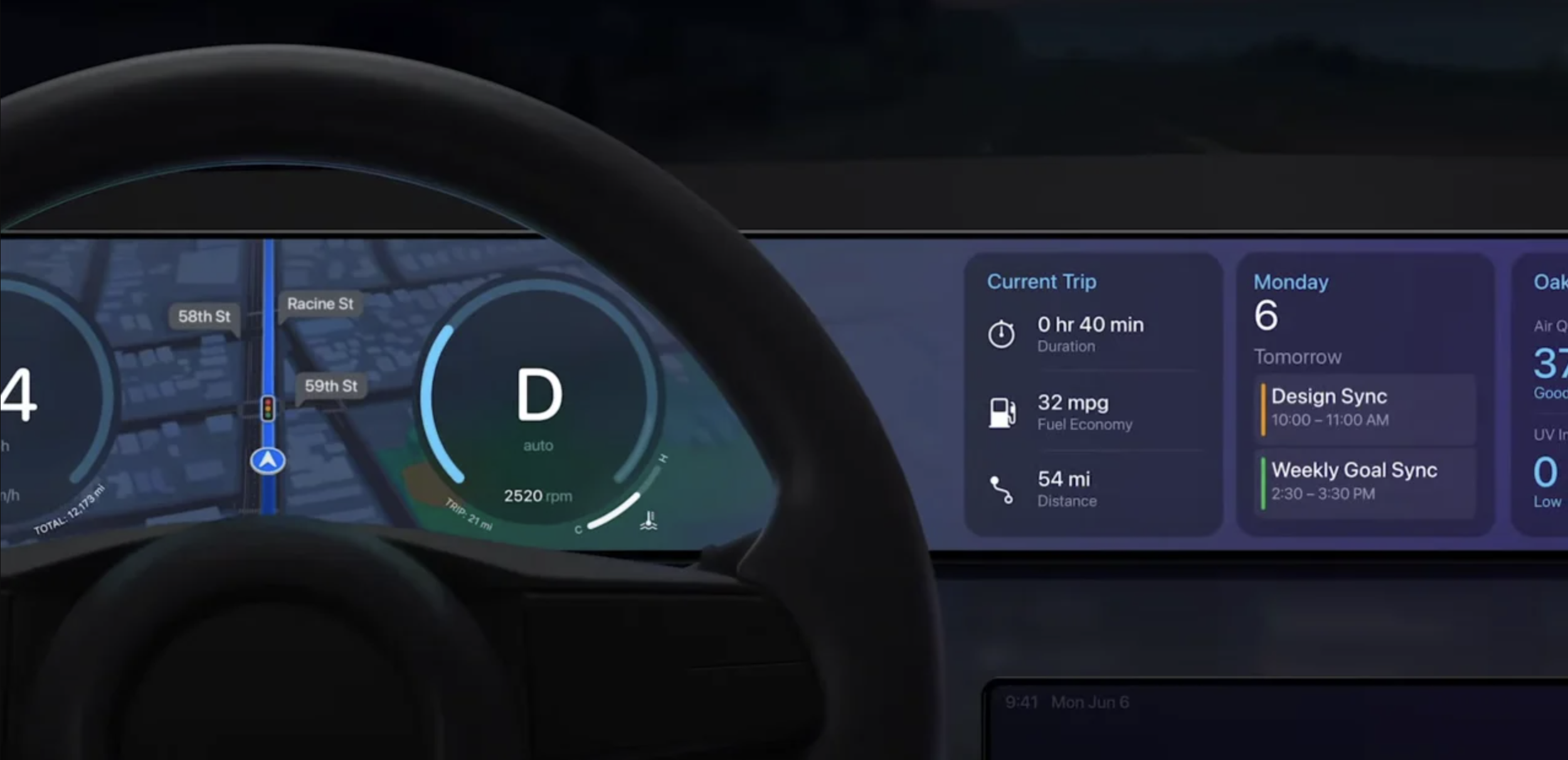
We watch the road, then check navigation.
As devices become more capable, the burden of managing information increasingly falls on the user.
auraOS explores an alternative future.
Instead of requiring users to seek information, what if information appeared naturally in the moment it became useful?
auraOS is a speculative concept for an AI-native operating system designed for lightweight smart glasses. By combining contextual awareness, computer vision, and ambient interfaces, the system delivers information directly within the user's field of view while minimizing distractions and preserving attention.
The goal is not to create another screen.
The goal is to reduce attention switching.
The Problem
Today's digital experiences are fragmented across multiple devices.
At the gym, users constantly alternate between exercise equipment, fitness trackers, workout apps, and notifications.
While walking, navigation requires repeatedly looking down at a phone.
While driving, information is distributed across dashboards, navigation systems, and mobile devices.
In social situations, people rely on memory, notes, or external tools to recall names, conversations, and commitments.
Each interaction introduces a small interruption.
Individually these moments seem insignificant.
Collectively they create a world where attention is constantly divided.
The Current Climate
Recent advances in wearable computing have produced three distinct categories of products.
Camera Glasses
e.g. Products like Ray-Ban Meta focus primarily on capture and voice interaction.
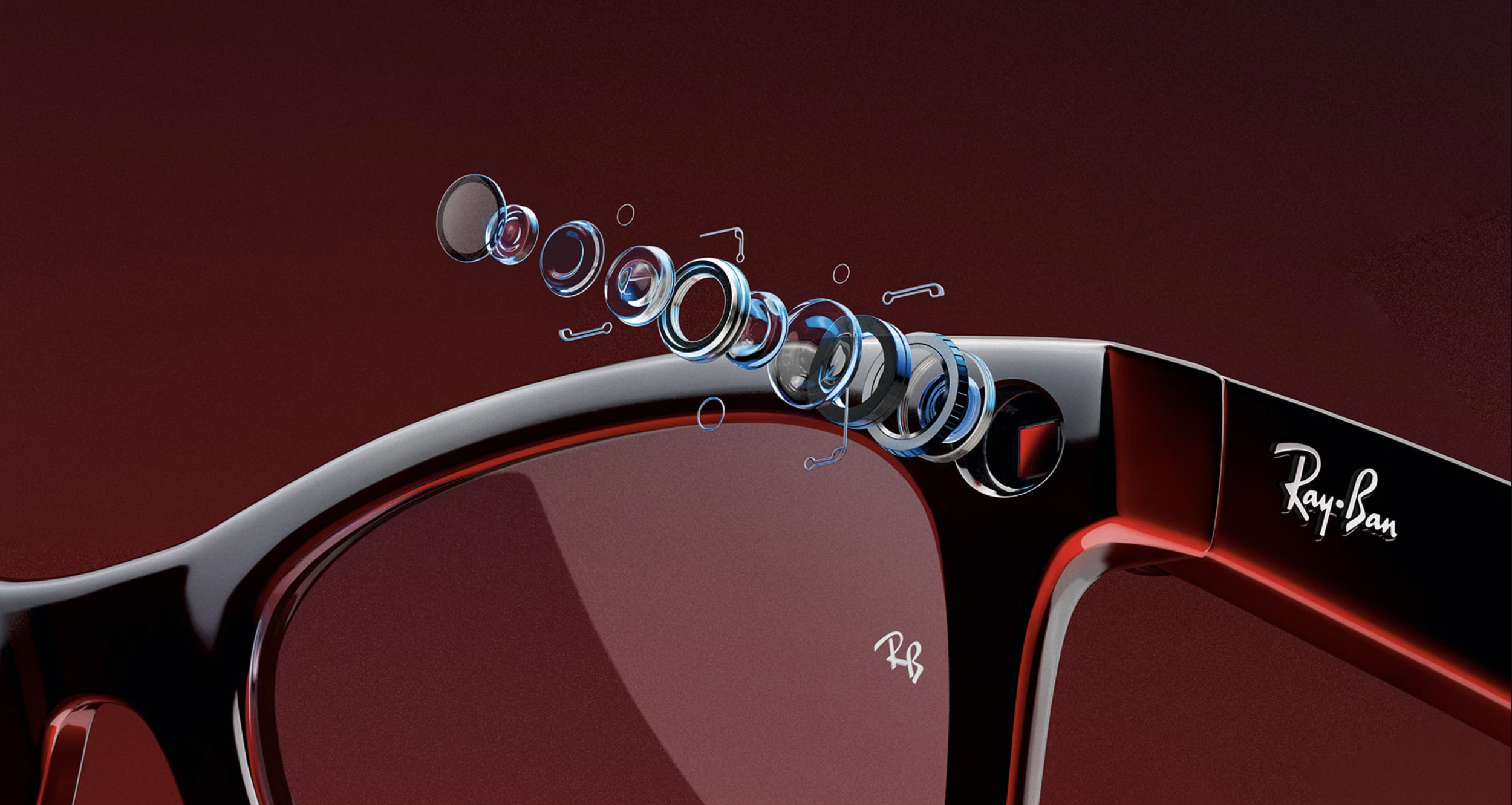
While useful for recording and AI assistance, they provide little persistent visual computing and still require users to rely on separate screens for most information.
Display Glasses
e.g. Products such as XREAL and other AR displays introduce visual overlays.
However, many treat the display as a floating screen rather than an intelligent layer integrated into everyday activities.
Spatial Computing Headsets
e.g. Devices such as Apple Vision Pro demonstrate powerful spatial interfaces and immersive computing experiences.
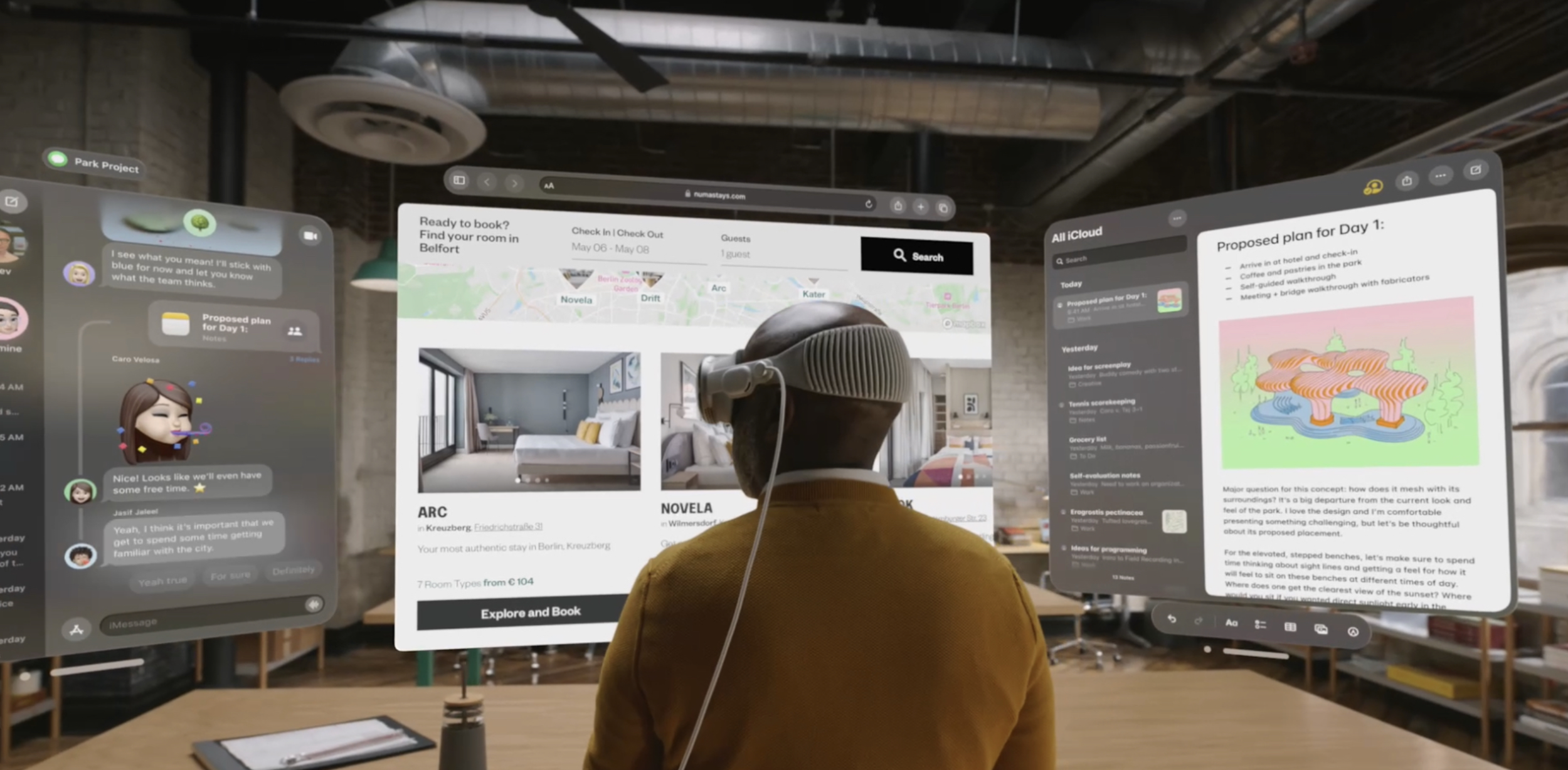
However, they are not designed for continuous, all-day use and remain too large and socially intrusive to replace everyday eyewear.
The Opportunity
The next generation of wearable computing should not focus on displaying more information.
It should focus on displaying less.
Rather than presenting apps, windows, and notifications, a smart glasses operating system should understand context and surface only what is relevant in a given moment.
AI makes this possible.
Computer vision can identify activities, environments, objects, and people.
Large language models can interpret intent and provide contextual assistance.
Advances in wearable hardware make all-day use increasingly realistic.
Together, these technologies create an opportunity for a new computing paradigm.
The Vision
auraOS is an AI-native operating system that places the right information in a user's field of view at the moment they need it.
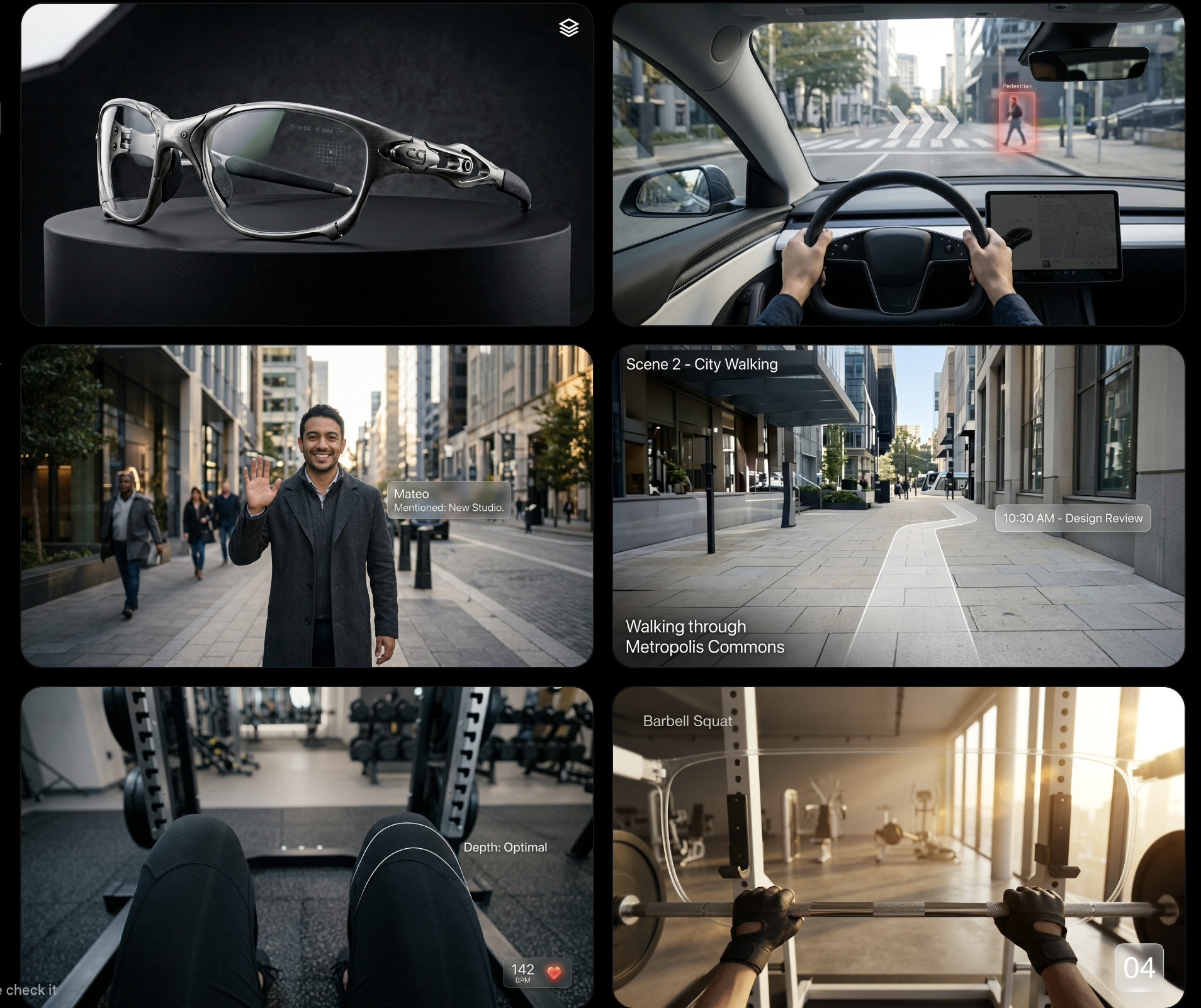
The system continuously observes context and adapts its behavior based on the user's environment and activity.
Instead of requiring explicit commands, information appears naturally when it becomes useful and disappears when it is no longer needed.
The interface remains secondary to reality.
The user remains focused on the world, not the operating system.
Focused Fitness
The best fitness technology is the technology that disappears.
Removing Key Disruptions
No need to frequently interrupt exercise to check rep counts, timers, heart rate metrics, or training plans.

No more breaks in focus or unnecessary friction.
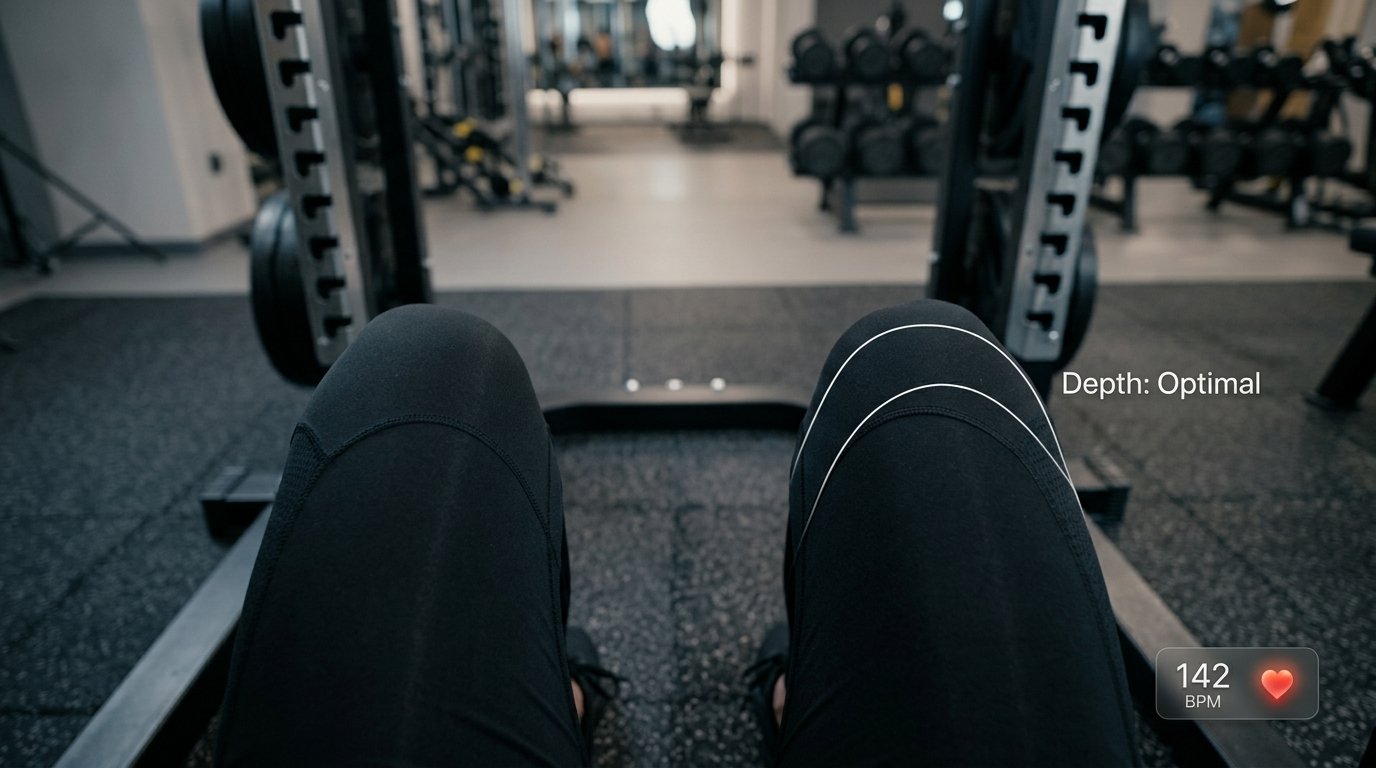
AI As A…Trainer and Spotter
auraOS detects the excercise, counts the reps, infers how well your form or completion was, coaches, and shows relevant HUD data, such as heart rate, under relevant contexts and in real time.
The user never reaches for a phone.
The user never glances at a watch.
The workout remains uninterrupted.
City Life
In the hustle and bustle of a city, information should appear where attention already exists.
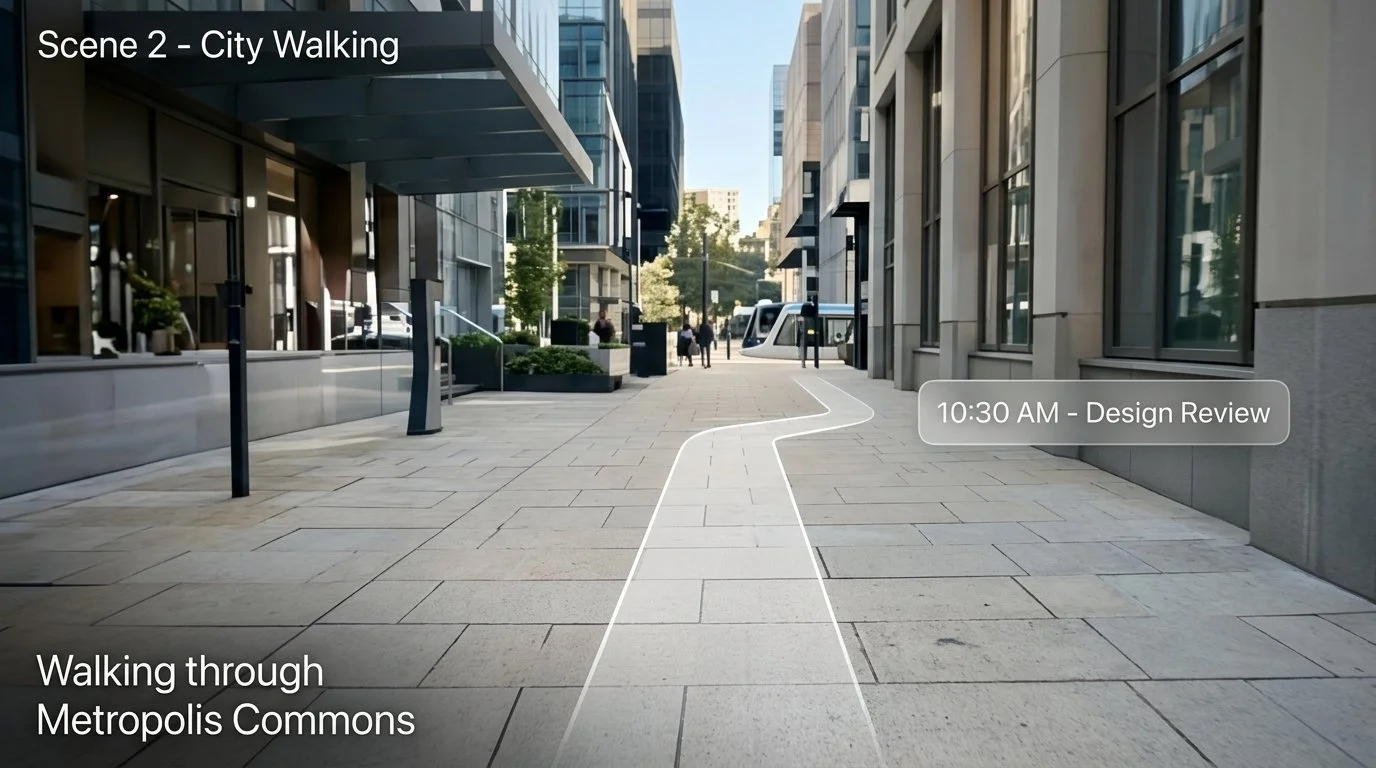
Always On Navigation
Imagine not having to open Maps once you got off of your train.
As the user walks through the city, navigation cues appear naturally along the intended path.
Upcoming turns, transit information, and contextual reminders surface only when relevant.
The environment remains the primary focus.
The user no longer needs to repeatedly consult a phone.
Smarter & Safer Driving
Attention remains on the road, not on displays.
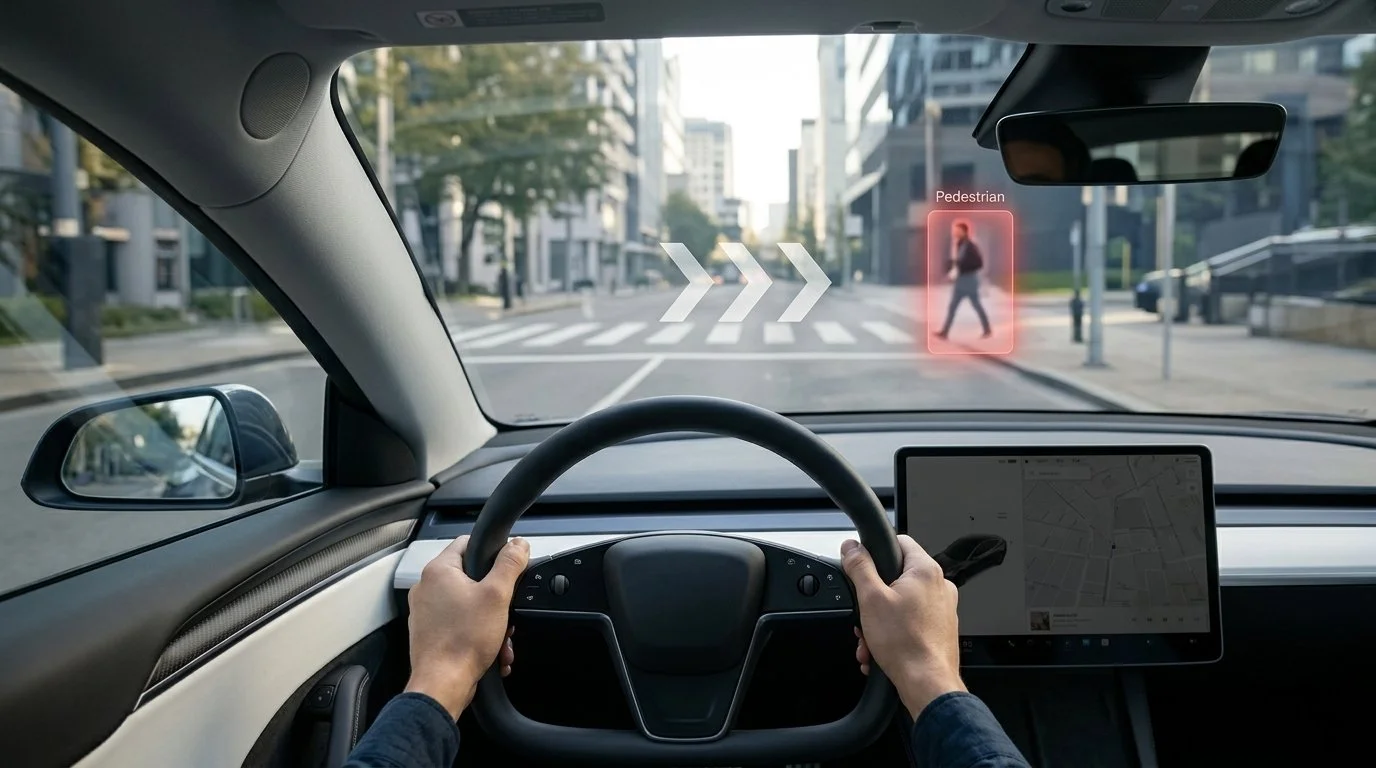
Smart Field of View
Relevant navigation guidance appears aligned with the road ahead.
Potential hazards are highlighted when necessary.
Information is prioritized based on urgency and safety.
Nonessential information remains hidden.
A Social Assistant
Never forget names, prior conversations, and commitments

Augmenting Memory To Make More Memories
When encountering a familiar person, auraOS provides subtle contextual reminders.
Previous conversation topics, shared interests, and follow-up commitments appear briefly before fading away.
The goal is not to replace memory.
The goal is to augment it.
Design Principles
Reality First
Digital content should never compete with the physical world.
Reality remains the primary interface.
Attention Is Sacred
Every notification consumes attention.
Information should appear only when it creates meaningful value.
Ambient by Default
The interface should disappear whenever it is not actively helping.
Context Before Interaction
The system should understand what the user is doing before asking for input.
Assistance, Not Interruption
AI should augment human capability without becoming the center of attention.
Rethinking the Operating System
The world becomes the interface.
auraOS is organized around context.
Traditional operating systems are organized around applications. Users launch software, navigate menus, and manage windows.
With auraOS:
The user's activity becomes the interface.
Instead of opening a fitness app, the system understands that the user is exercising.
Instead of launching navigation, the system understands that the user is traveling.
Instead of searching for information, the system recognizes when information is needed.
The operating system fades into the background.
Future Considerations
Trust
How should the system communicate confidence and uncertainty?
Safety
When should AI interrupt a user?
When should it remain silent?
Social Acceptance
How can wearable computing become useful without becoming intrusive?
These challenges are not limitations of the concept.
They are central design opportunities.
Privacy
How should contextual information be collected, stored, and protected?
Reflection
The Smart Glasses Conversation Doesn’t Have To Be About Hardware
auraOS explores a different question.
What information deserves to exist in a person's field of view?
As AI becomes more capable and wearable technology becomes more practical, the future of computing may not be defined by larger screens or more immersive interfaces.
It may be defined by interfaces that disappear entirely.
auraOS is an exploration of what that future could look like.